 Qorrect Blog

In today’s rapidly evolving higher education landscape, universities and educational institutions are moving towards digital formative assessment tools. Formative evaluation techniques play a crucial role in this shift, enabling universities to monitor student progress, adjust teaching strategies, and enhance learning outcomes in real-time.
Qorrect platform enhances this process by providing formative assessment strategies and tools that link feedback, analytics, and learning outcomes in one integrated system, making formative evaluation more strategic, measurable, and aligned with academic quality goals.
Enhance your university’s formative evaluation techniques with Qorrect platform
Book a free demo from the Qorrect platform now!!
Table of Contents
What Are Formative Evaluation Techniques?
Formative evaluation techniques are well-structured methods used by universities to continuously monitor student learning throughout a course, rather than measuring performance only at the end. Formative evaluation techniques focus on improvement, feedback, and adjustment during the learning process.
In higher educational institutions and universities, formative evaluation tools are not just frequent quizzes; they are a systematic approach designed to identify gaps early, support instructional improvement, and strengthen alignment with learning outcomes. When applied strategically, these techniques become a key component of academic quality management.
Modern universities increasingly merge these techniques with digital assessment tools, allowing real-time feedback, performance tracking, and data analytics. Qorrect platform supports formative evaluation techniques and turning everyday classroom feedback into actionable academic insight.
Why Formative Evaluation Techniques Matter in Higher Education
Formative evaluation techniques are no longer optional assessment tools in modern universities; they are essential components of academic quality and continuous improvement. As educational institutions shift toward data-driven decision-making and outcome-based education, these techniques play a critical role in strengthening both teaching effectiveness and student performance.
Here’s why formative evaluation techniques matter in higher education:
- Support Continuous Learning Improvement
Formative evaluation techniques allow professors to identify learning gaps early and adjust teaching strategies before small misunderstandings become major academic challenges.
- Enhance Student Engagement
Regular assessments encourage consistent participation and reduce reliance on high-pressure final exams.
- Provide Timely and Actionable Feedback
Students receive immediate insights into their performance, enabling them to improve while the course is still in progress.
- Align Learning Activities with Outcomes
When structured properly, formative evaluation techniques ensure that classroom tasks directly support course and program learning outcomes.
- Strengthen Academic Decision-Making
Universities can use performance data generated from formative evaluation to refine curricula, adjust instructional approaches, and improve overall program effectiveness.
- Improve Institutional Quality Assurance
Continuous assessment creates documented evidence of monitoring and improvement, which is essential for accreditation and academic quality reviews.
When supported by Qorrect platform, formative evaluation techniques become scalable, measurable, and strategically aligned with institutional goals, turning everyday feedback into meaningful academic progress.
read more about: Assessment Methods in Higher Education |Types and Benefits
Common Formative Evaluation Techniques Used in Universities
In the academic environment, formative evaluation techniques are vital tools that help universities monitor learning progress, improve teaching effectiveness, and strengthen academic quality. By integrating well-structured techniques across courses and programs, educational institutions create a culture of continuous feedback and measurable improvement.
These are the most common formative evaluation techniques used in universities
- Low-Stakes Quizzes
One of the most widely used formative evaluation techniques, short quizzes help professors check understanding regularly. These techniques provide immediate feedback and reduce reliance on high-stakes exams.
- Draft Submissions with Feedback
Allowing students to submit drafts before final grading is among the most effective formative evaluation techniques. These techniques promote revision, deeper learning, and skill refinement.
- Peer Review Activities
Peer feedback is another practical example of formative evaluation techniques. Through structured peer evaluation, these techniques encourage critical thinking and collaborative learning.
- Interactive Polling and In-Class Questions
Digital response systems and live polling are modern formative evaluation techniques that quickly measure comprehension during lectures. These techniques enable professors to adjust teaching in real time.
- Reflective Journals and Self-Assessment
Reflective exercises are student-centered formative evaluation techniques that build self-awareness and independent learning habits. These techniques strengthen long-term academic development.
- Project Milestones with Continuous Feedback
Breaking large projects into stages is one of the most strategic formative evaluation techniques. These techniques ensure students stay on track and receive structured guidance throughout the learning process.
When universities implement structured formative evaluation techniques, especially through Qorrect platform, they create a scalable and measurable framework for academic excellence. In this way, these techniques are not just classroom methods; they are strategic instruments that enhance institutional performance and student success.
read more about: Effective Student Evaluation Methods for Universities
Comparison Between Formative vs Summative Evaluation
In higher education, understanding the distinction between formative evaluation techniques and summative evaluation is essential for building a balanced and effective assessment system. While summative evaluation measures final achievement, these techniques focus on continuous improvement throughout the learning process. Universities that strategically integrate these techniques alongside summative methods create stronger academic outcomes and more reliable quality assurance frameworks.
The table below highlights the key differences:
| Aspect | Formative Evaluation | Summative Evaluation |
| primary purpose | Improve learning during the course and provide continuous feedback. | Measure final achievement at the end of a course. |
| Timing | Conducted regularly throughout the semester. | Conducted at the end of the semester or academic year. |
| Focus | Focuses on progress, development, and identifying learning gaps. | Focuses on the final performance. |
| Feedback | Immediate, detailed, and actionable feedback. | Limited feedback. |
| Risk level | Low-stake | High-stakes |
| Impact on student learning | Encourage engagement and continuous improvement. | Evaluate cumulative knowledge. |
| Role in academic decision-making | providing ongoing data to adjust teaching strategies. | Provides outcome data for certification, grading, or promotion |
In practice, universities achieve the strongest results when these techniques and summative evaluation are merged into an assessment strategy. While summative evaluation confirms what has been achieved, formative evaluation tools ensure that improvement happens along the way, making them essential for student success, academic quality, and long-term institutional excellence.
read more about: How to Prevent Cheating on Online Tests in Universities
How Technology Enhanced Formative Evaluation Techniques
Technology has significantly transformed how universities implement these techniques, making them more scalable, data-driven, and impactful. Traditional classroom-based formative evaluation methods often relied on manual feedback and informal tracking. Today, digital innovation allows formative evaluation techniques to become measurable, automated, and strategically aligned with institutional goals.
Here’s how technology enhances formative evaluation techniques in higher education:
- Real-Time Feedback and Instant Grading
Digital platforms automate quizzes and short assessments, enabling these techniques to deliver immediate feedback. This helps students adjust their learning instantly and supports continuous improvement.
- Data-Driven Insights and Analytics
Modern systems collect performance data from formative evaluation methods and transform it into actionable insights. Universities can track trends, identify learning gaps, and monitor progress across courses and programs.
- Scalability Across Large Institutions
Technology allows formative evaluation tools to be implemented consistently across departments, ensuring standardized assessment practices even in large universities.
- Alignment with Learning Outcomes
Digital formative evaluation tools can be directly mapped to course and program learning outcomes, strengthening academic alignment and supporting quality assurance processes.
- Personalized Learning Support
Powered systems analyze results from formative evaluation techniques to detect individual student weaknesses and recommend targeted interventions.
- Improved Documentation for Accreditation
Technology stores and organizes data generated from formative evaluation techniques, making it easier to produce structured reports for accreditation and academic audits.
- Enhanced Engagement Through Interactive Tools
Polling systems, gamified quizzes, and collaborative digital activities modernize formative evaluation techniques, increasing student participation and motivation.
When universities integrate technology into these techniques, assessment becomes more than a classroom activity; it becomes a strategic, institution-wide system that drives measurable improvement, strengthens academic decision-making, and enhances overall educational quality.
How Qorrect Supports Formative Evaluation Techniques
Implementing formative evaluation techniques effectively at the university and educational institutions requires more than occasional quizzes or informal feedback. It requires structure, alignment, analytics, and scalability. Qorrect enhances these techniques by transforming them into a measurable, institution-wide system that supports academic quality and continuous improvement.
Here’s how Qorrect enhances formative evaluation techniques in higher education:
- Structured Design of Formative Evaluation Techniques
Qorrect enables professors to design and organize these techniques aligned directly with course and program learning outcomes, ensuring consistency across departments.
- Instant Feedback Through Digital Assessments
By automating quizzes and short assessments, Qorrect makes formative evaluation tools more efficient and impactful, providing students with immediate, actionable feedback.
- Outcome-Based Mapping and Tracking
Qorrect links formative evaluation tools to specific learning outcomes, allowing academic professors to monitor how well those outcomes are being achieved throughout the semester.
- Advanced Analytics and Performance Dashboards
Qorrect platform converts data generated from these techniques into visual dashboards and performance reports, helping universities identify trends, strengths, and learning gaps.
- Scalable Implementation Across Programs
Qorrect platform standardizes formative evaluation methods across courses and colleges, ensuring institutional alignment and reducing inconsistencies in assessment practices.
- AI-Driven Insights for Early Intervention
Using intelligent analysis, Qorrect enhances formative evaluation tools by detecting at-risk students early and enabling targeted academic support.
- Accreditation-Ready Documentation
All data collected from formative evaluation techniques is stored and organized systematically, making it easier to produce evidence for quality assurance and accreditation reviews.
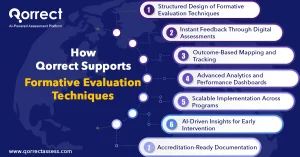
Through these capabilities, Qorrect platform transforms formative evaluation techniques from individual classroom practices into a strategic academic framework, supporting better decision-making, stronger student outcomes, and measurable institutional excellence.
Don’t miss the chance to be part of Qorrect’s educational community.
Contact Now with Qorrect Platform Experts,
FAQs:-
1-How do formative evaluation techniques support learning outcomes?
Formative evaluation techniques directly strengthen learning outcomes by creating a continuous feedback loop between teaching and performance. Instead of waiting until the end of a course, formative evaluation tools allow instructors to measure progress toward specific learning outcomes throughout the semester.
They support learning outcomes by:
- Aligning assessments with clearly defined course and program objectives
- Identifying learning gaps early before they affect final performance
- Providing timely, actionable feedback that guides improvement
- Generating performance data that helps refine curriculum design
- Supporting evidence-based academic decision-making
When implemented systematically—especially through digital platforms—formative evaluation techniques ensure that learning outcomes are not just stated goals, but measurable and continuously monitored achievements.
2-Are formative evaluation techniques suitable for online learning?
Yes, formative evaluation techniques are highly suitable—and often even more effective—in online learning environments. In digital settings, continuous engagement and structured feedback are essential for maintaining student performance and motivation.
Formative evaluation techniques work well online because they:
- Enable real-time quizzes and interactive assessments
- Provide instant automated feedback
- Support discussion boards and peer review activities
- Allow instructors to track participation and progress digitally
- Generate analytics that help identify at-risk students early
With the support of Qorrect platform, formative evaluation tools become scalable, trackable, and fully aligned with online and blended learning models—ensuring academic quality regardless of delivery format.