 Qorrect Blog

A reliable marking system in education is fundamental for ensuring transparency, fairness, and consistent evaluation of the academic performance of students. Because educational institutions continue transforming toward modern assessment methods, traditional marking strategies are becoming less efficient and may cause human errors.
Recently, educational institutions and universities have been increasingly depending on advanced tools such as a digital marking system and automated marking to deliver faster and more accurate results.
The Qorrect platform plays a magic role in transforming into a smart, unified grading system that enhances accuracy, speeds up correction, and provides institutions with instant analytics.
Book a free demo from Qorrect platform now!!
What Is a Marking System in Education?
A marking system in education means the structured process in educational institutions used to assess students’ performance, measure learning outcomes, and assign grades based on predefined criteria. A marking system in education includes all methods of assessing students’ work, whether through quizzes, assignments, exams, or online admissions.
A solid marking system in education ensures fairness, transparency, and consistency in all stages of assessments. Educational digital solutions are restructuring how marking is conducted, which makes the process faster, more reliable, and flexible.
Here comes the role of the Qorrect platform, which enhances the marking system in education by offering a streamlined exam creation and secure digital assessment process. Qorrect platform ensures that educational institutions apply grading rules consistently, analyse results professionally, and maintain full integrity in the assessment process.
Table of Contents
Importance of Marking Systems for Universities
Today, modern educational institutions depend on a marking system in education to make sure of fairness, accuracy, and consistency in evaluating student performance. A well-structured marking system in education helps educational institutions maintain academic integrity in addition to providing students with transparent and reliable feedback that supports the learning process.
Key benefits of the marking system in education for universities:
- Ensure fairness and objectivity
A marking system in education eliminates human bias and guarantees that all students are assessed according to the same standards.
- Improves grading accuracy
A marking system in education supported by cutting-edge education tools that reduce human error and ensure precise scoring in all exam formats.
- Supports large-scale assessments
Educational institutions and universities can efficiently evaluate thousands of exams without wasting quality or time.
- Provides instant and transparent feedback
Students receive instant feedback and clear insight about their strengths and weaknesses, which helps them enhance their academic performance.
- Improves academic decision-making
With a marking system in education, universities and educational institutions can identify patterns, learning gaps, and trends to develop curriculum design and teaching methods.
- Saves time and reduces workload
A marking system in the education streamlines grading, allowing professors to focus more on teaching and student engagement.
Qorrect platform enhances the marking system in education by providing automated workflows, error-free grading, analytics dashboards, and integrated assessment tools that help universities structure both teaching and evaluating quality.
Read more about: The Importance of Automatic Exam Correction for Professors
Types of Marking Systems in Education?
Types of marking systems in education change based on assessment goals, institutional policies, and the level of automation used. Each marking system in education offers different advantages in measuring student performance, ensuring fairness, and improving grading accuracy. Understanding these types helps universities choose the method that best aligns with their academic needs and digital transformation plans.
Today, Qorrect platform supports all major marking systems with advanced tools that streamline scoring, enhance transparency, and reduce human error.
Here are the main types of marking systems in education:
- Traditional Manual Marking
Based on professors reviewing paper exams and grading manually. Suitable for essay-type assessments, but time-consuming and prone to human errors.
- Rubric-Based Marking
Uses predefined criteria to ensure consistent and transparent evaluation. Ideal for academic performance tasks, projects, and long-answer questions.
- Digital Marking System
Involves marking exams electronically using software tools. Improves speed, reduces paperwork, and enables centralized result tracking.
- Automated Exam Marking
Relies on AI and machine-learning algorithms to automatically score MCQs, bubble sheets, and objective questions. Ensures high accuracy and eliminates human bias.
- Hybrid Marking System
Combines manual grading for subjective questions with digital or automated marking for objective items, achieving the best balance between quality and efficiency.
Read more about: Online Exam Management System: Complete Guide with Qorrect
Benefits of Digital Marking Systems for Higher Education
The shift toward modern assessment tools has made the marking system in education more accurate, transparent, and easier to manage. Digital marking solutions are transforming the way faculty evaluate exams, helping educational institutions save time, reduce human error, and improve the quality of grading.
Here are the key benefits of using digital marking systems:
- Higher grading accuracy
Digital marking tools reduce human errors by applying consistent rules and preventing calculation errors.
- Faster evaluation of a large exam
Digital marking can grade thousands of exams quickly, ensuring students receive their results without delay.
- Improved transparency and fairness
A unified marking process ensures every student is evaluated the same way, reducing subjectivity.
- Centralized and secure record-keeping
Results and feedback are stored safely in the same system, making audits and accreditation processes easier and faster.
- Enhanced feedback for students
Digital marking systems allow professors to add comments, explanations, and quick insights to help students improve.
- Better analytics and insights
Universities can track performance trends, identify weak areas, and make data-driven decisions for curriculum improvement.
- Seamless integration with learning platforms
Digital marking tools integrate easily with LMS systems, making the assessment workflow easier for faculty and students.
Read more about: Types of Questions in Exam | How Qorrect Makes Them Smarter
How Do Marking Systems Support Accreditation and Quality Assurance?
A Marking system in education plays a major role in helping universities achieve accreditation standards and maintain strong quality assurance practices. Accurate, consistent, and transparent marking is not only essential for fair evaluation but also a fundamental requirement for national and international accreditation. Modern marking system in education provides institutions with structured evaluation processes, clear documentation, and reliable performance analytics
Key ways a marking system in education supports accreditation and quality assurance:
- Ensures consistent grading across departments and faculties.
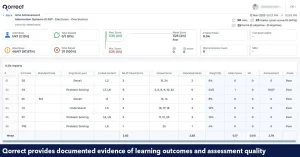
- Provides documented evidence of learning outcomes and assessment quality.
- Enhances transparency and reduces human bias through unified criteria.
- Offers instant analytics that help universities monitor academic performance trends.
- Supports compliance with accreditation bodies requiring digital records and measurable outcomes.
- Enables external evaluators to review assessment processes quickly and accurately.
- Helps educational institutions track improvements over time with data-driven insights.
With Qorrect, institutions can standardise grading across faculties and courses, ensuring fairness and consistency, maintain accurate records of student performance for accreditation audits, track learning outcomes effectively to meet regulatory and academic benchmarks, utilise detailed analytics to identify areas needing improvement, and ensure continuous quality enhancement.
Can Digital Marking Systems Help Universities Reduce Operational Costs?
A Marking system in education that operates digitally does more than improve efficiency; it can significantly reduce operational expenses across the assessment cycle. Universities spend substantial budgets on printing, distributing, collecting, and manually grading exams. Digital systems eliminate many of these costs while improving scalability and sustainability.
Key cost-saving benefits include:
- Eliminating printing and paper-handling expenses.
- Reducing the number of humans required for manual grading.
- Minimizing exam storage and logistics costs.
- Lowering human-error rates that lead to costly remarking or administrative corrections.
- Automating reporting and result analysis instead of outsourcing.
- Speeding up workflows, allowing academic staff to focus on teaching rather than administrative tasks.
- Supporting remote examinations, reducing venue and proctoring costs.
- Implementing a marking system in education digitally can significantly lower operational costs while improving efficiency.
With the Qorrect platform, universities can gain a lot of benefits, such as automating exam correction and reducing administrative workload, minimizing paper and printing costs through electronic assessments, saving time for faculty by providing instant grading and performance reports, and streamlining data management, reducing manual errors, and improving decision-making efficiency.
Read more about: Best Assessment System in Education | A Complete Guide
How Does Qorrect Enhance Academic Integrity in Examinations?
Qorrect’s advanced Marking system in education is designed to protect academic integrity at every stage of the assessment process. With smart automation and AI-driven monitoring, Qorrect platform ensures fairness, prevents cheating, and maintains strict transparency throughout exam creation, delivery, and marking.
Here’s how Qorrect platform enhances academic integrity:
- Secure exam delivery using encrypted browsers and controlled access to prevent unauthorized actions.
- AI-powered proctoring that detects suspicious behavior, unusual patterns, or potential cheating attempts in real time.
- Randomized question banks that generate unique exams for every student, minimizing the chances of question leaks.
- Automated audit trails that record every action inside the exam environment, ensuring full transparency and accountability.
- Consistent and unbiased marking through automated correction, eliminating human error and grading discrepancies.
- Advanced analytics that highlight abnormal response patterns or inconsistencies that may indicate dishonest attempts.
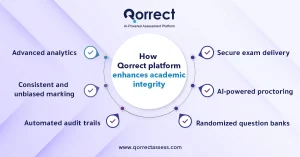
By integrating these capabilities, Qorrect platform provides universities with a reliable, secure, and fully automated framework that protects exam credibility and supports fair student evaluation at every stage
Don’t miss the chance to be part of Qorrect’s educational community.
Contact Now with Qorrect Platform Experts,
FAQs
1- Can automated marking systems handle essay questions?
Yes, modern marking systems in education, such as Qorrect, can evaluate essay questions by using predefined rubrics and AI-assisted analysis. This ensures consistency, reduces grading time, and maintains fairness across all submissions.
2- How do marking systems support accreditation in Saudi universities?
A reliable marking system in education helps Saudi universities meet accreditation requirements by standardising grading, maintaining accurate student records, and generating detailed analytics for audits. Platforms like Qorrect streamline these processes, ensuring transparency and adherence to regulatory standards.
3- What is the difference between a grading system and a marking system?
While a grading system assigns scores or letter grades based on performance, a marking system in education encompasses the entire evaluation process, including assessment design, scoring, analysis, and reporting. Tools like Qorrect integrate both functionalities to enhance accuracy and efficiency in academic assessments.